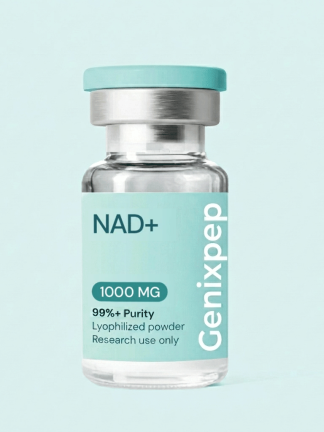
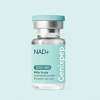
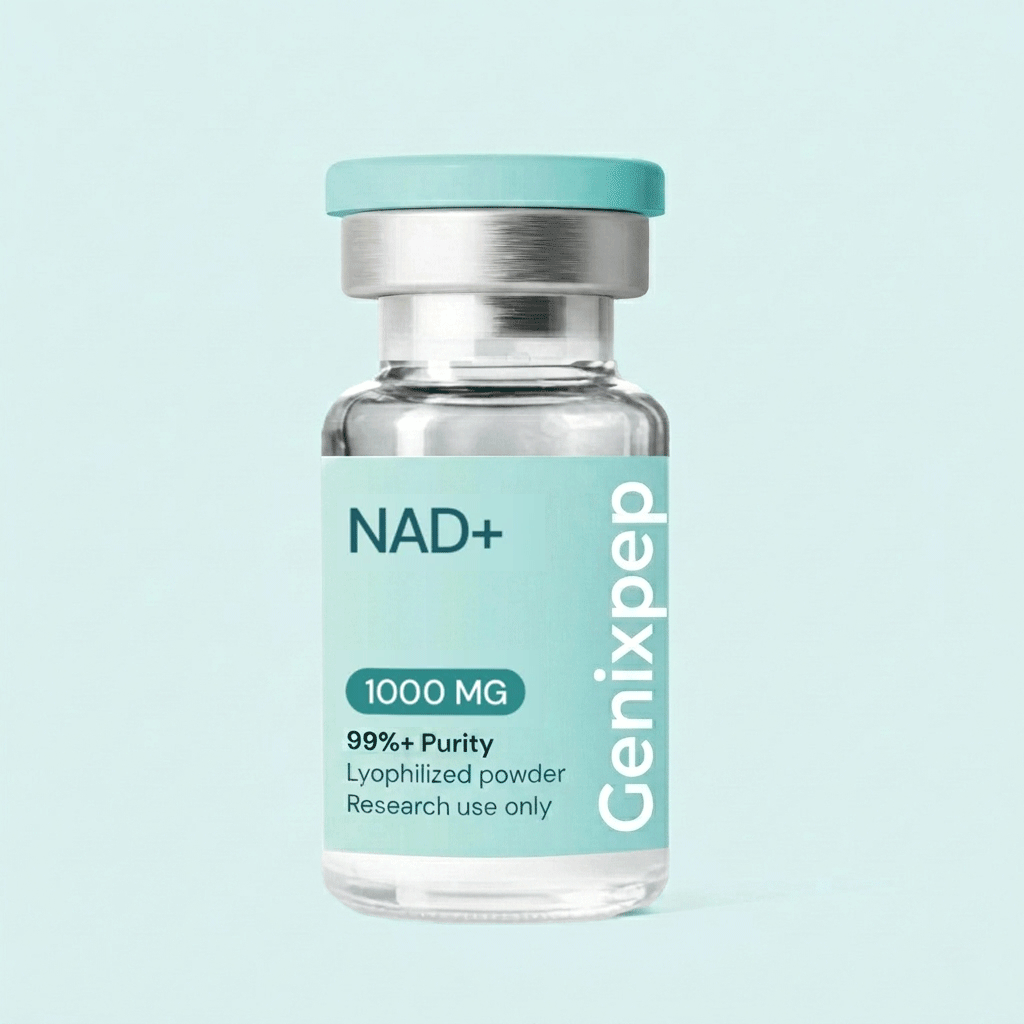
NAD+

Price range: $26.00 through $64.00 / 10 Vials

NAD⁺ (oxidized nicotinamide adenine dinucleotide) is a ubiquitous pyridine nucleotide coenzyme that accepts hydride ions in key metabolic pathways—glycolysis, the tricarboxylic acid cycle, and fatty-acid β-oxidation—to generate NADH for ATP production via oxidative phosphorylation. Beyond its redox role, NAD⁺ serves as an essential cosubstrate for NAD⁺-consuming enzymes such as sirtuin deacetylases and poly-ADP-ribose polymerases, thereby regulating gene expression, DNA-damage repair, and cellular stress responses. NAD⁺ availability also modulates mitochondrial biogenesis and metabolic homeostasis through SIRT1-PGC-1α signaling and impacts aging-related processes, as cellular NAD⁺ levels decline with age.

Product Details

Chemical Name:Nicotinamide Adenine Dinucleotide (oxidized form)
Molecular Formula:C₂₁H₂₇N₇O₁₄P₂
Molecular Weight:663.43 g/mol
PubChem CID:5883
CAS Number:53-84-9
Synonyms:NAD⁺, Coenzyme I
Contents:Lyophilized powder, white/off-white color

Additional information

Size

1000mg, 500mg, 100mg

Mechanism of action

Redox Coenzyme in Bioenergetics
NAD⁺ accepts hydride ions from key metabolic pathways—glycolysis, the tricarboxylic acid (TCA) cycle, and fatty‐acid β-oxidation—to form NADH, which then donates electrons to the mitochondrial electron‐transport chain for ATP synthesis via oxidative phosphorylation
Substrate for NAD⁺-Consuming Enzymes
Serves as an obligatory co-substrate for sirtuin deacetylases (e.g., SIRT1/3), poly-ADP-ribose polymerases (PARPs), and the NADase CD38, thereby regulating protein deacetylation, DNA-damage–response ADP-ribosylation, and calcium signaling.
Modulation of Gene Expression & Stress Responses
Through SIRT1-mediated deacetylation of transcriptional regulators (e.g., PGC-1α) and PARP-driven DNA repair, NAD⁺ levels fine-tune mitochondrial biogenesis, antioxidant defenses, and genomic stability under stress conditions.
Salvage Pathway & Mitochondrial Health
The NAMPT-dependent salvage pathway recycles nicotinamide into NAD⁺, sustaining intracellular pools; conversely, age-associated CD38 upregulation degrades NAD⁺, contributing to mitochondrial dysfunction.

Storage & handling

Storage:Store the lyophilized vial in a cool, dry area protected from direct sunlight.